
#241
Mar 16, 2026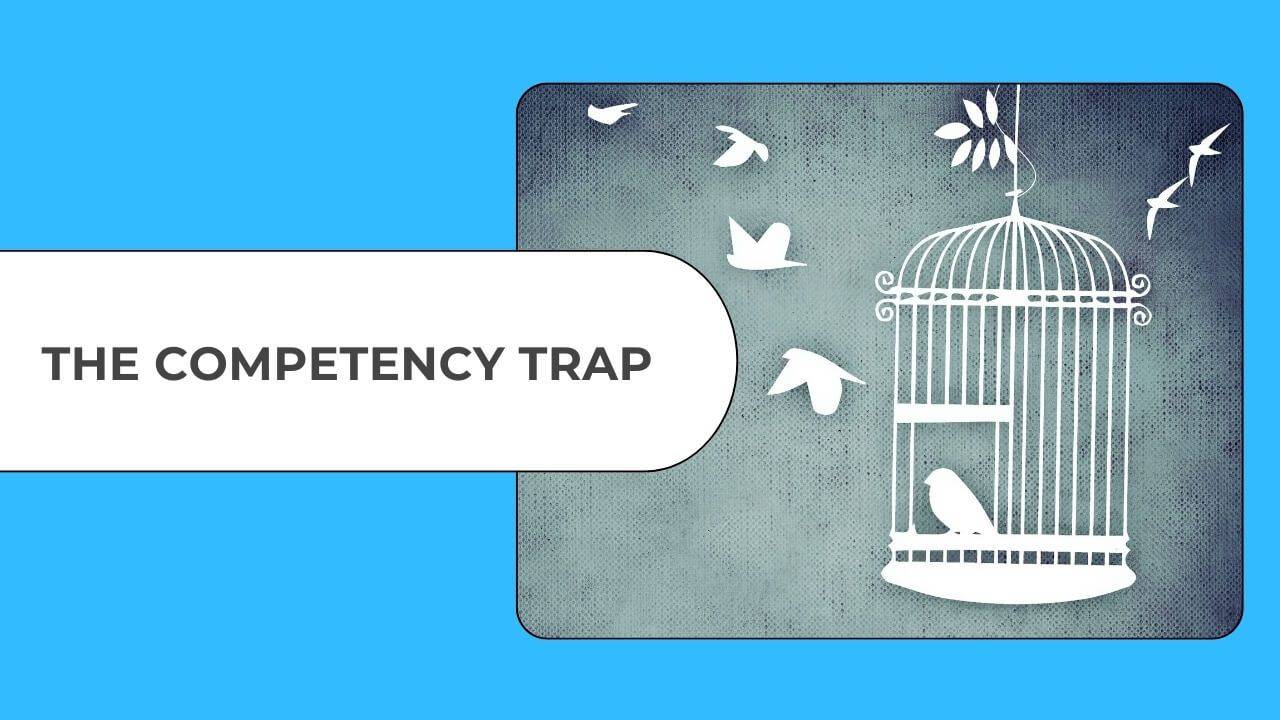
You are very good at what you do.
That might be the problem.
I was facilitating an offsite with a senior executive team. One of the leaders was technically exceptional. Sharp. Structured. Quick to solve. When the conversation got messy, she would bring clarity. When they drifted, she would summarise.
In every measurable way, she was competent. More than competent, especially in comparison to her peers.
And yet something wasn’t landing.
Colleagues deferred to her.
They didn’t engage with her.
Afterwards I asked her, “What did you notice?”
She said, “I kept fixing things. That’s what I’m good at.”
Then she paused.
“And maybe that’s why they are reluctant to speak up.”
That’s the trap.
Competence earns control.
Competence earns status.
Competence earns identity.
And identity is sticky.
Michael Bungay Stanier describes the competency trap as the pattern of continuing to do what you’re good at even when it’s no longer what’s needed, or no longer what grows you.
It feels smart.
It feels efficient.
It feels safe.
Because when you operate inside your competence, you feel certain.
The problem?
The organisation might now need influence, not expertise.
Your team might need questions, not answers.
Your next chapter might require vulnerability, not efficiency.
But competence whispers: “Stay here. You’re impressive here.”
So, we double down.
The technical expert avoids emotional exposure.
The high performer hides behind output.
The operator dismisses relational work because it feels…soft.
It’s not that they can’t grow.
It’s that growth would make them look temporarily less competent.
Here’s an uncomfortable truth:
A more expanded version of you requires you to be (in)visibly worse for a while.
You might ask clumsy questions.
You might misread the room.
You might try language that feels unnatural.
You might look less impressive.
That’s the entry fee.
Some high performers would rather stay competent than evolve.
Because competence protects status.
But it also caps trajectory.
If your identity depends on being the capable one, you might quietly avoid anything that threatens that image.
And sometimes the very skill that built your reputation becomes the thing that limits your impact.
So, sit with this:
> Where are you overusing your competence because it feels safer?
> Where are you avoiding stretch because it risks looking awkward?
> If your strongest skill disappeared tomorrow, what would be exposed?
Competence feels certain.
But certainty is not the same as growth.
The real question isn’t whether you’re capable.
It’s this:
Are you willing to put the L plates back on publicly?
Because evolution requires it.
And competence, left unexamined, can become a cage.